

What Is PRP and How Does It Work?
You may have heard it called the “vampire facial”, which does it no favours, because it makes a genuinely clever treatment sound like a gimmick. Strip away the nickname, and PRP is one of the more interesting things in aesthetics: a treatment that uses a small sample of your own blood to prompt your skin and hair to renew themselves.
No synthetic products, no foreign substances. Just your body’s own repair machinery, concentrated and put to work where you want it. Here is how PRP actually works, what it can do for skin and hair, and what to expect, from our doctor-led team at Apsaras Aesthetic Clinic in Coventry.
What PRP Actually Is
PRP stands for platelet-rich plasma. Your blood is made up of red and white cells, plasma and platelets. Platelets are best known for helping blood to clot, but they also contain growth factors, the signalling molecules your body uses to repair and regenerate tissue.
PRP is simply your own plasma with those platelets and their growth factors, concentrated into a higher dose than normal. When it is delivered into the skin or scalp, those growth factors stimulate collagen production, improve blood supply to the area, and encourage cell renewal.
Because it comes entirely from you, there is no risk of an allergic reaction or of introducing anything your body might reject. That is a large part of its appeal.
How The Treatment Works, Step by Step
The process is straightforward and happens entirely in one appointment.
First, we draw a small sample of your blood, exactly like a routine blood test. Then the sample is placed in a centrifuge, a machine that spins it at high speed to separate the components and concentrate the platelet-rich plasma. Finally, that plasma is delivered back into the target area.
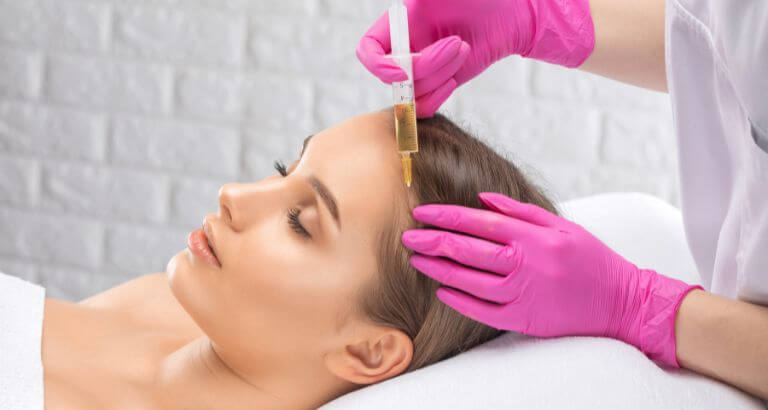
How it is delivered depends on what we are treating. For the face, it is often applied alongside microneedling, where tiny channels in the skin let the plasma penetrate deeply, or injected into specific areas. For hair, it is injected into the areas of the scalp where hair is thinning.
An appointment usually takes under an hour, and most people return to normal activities the same day.
What PRP Can Do For Your Skin
Used for facial rejuvenation, PRP works gradually and naturally because it is prompting your own skin to rebuild rather than filling or freezing anything.
The growth factors stimulate fresh collagen and elastin, the proteins that keep skin firm and springy. Over the following weeks, that translates into improved skin texture and tone, softening of fine lines, a fresher and more even appearance, and help with concerns like acne scarring and pigmentation.
Because it relies on your body’s own regeneration, the results build over time rather than appearing overnight. Many people notice improvement within the first couple of weeks, with the fuller effect developing over the following months as new collagen forms. A course of sessions usually gives the best result, and it works well as part of a wider skin plan.
It is worth being straight about expectations. PRP is a rejuvenation treatment that improves skin quality. It is not a filler and will not add significant volume, and results vary from person to person because everyone’s plasma and healing response differ. What it does very well is improve the overall health and appearance of your skin.
What PRP Can Do For Your Hair
PRP has become a popular, natural option for thinning hair, and it works on the same principle.
Injected into the scalp, the growth factors stimulate the hair follicles, encouraging dormant follicles into activity and helping to strengthen and thicken existing hair. It is used for various kinds of hair thinning, including hormone-related thinning and thinning that follows periods of stress or illness.
Hair responds slowly by nature, so patience is needed. Many people begin to see changes from around three weeks, with improvement continuing over the following months. A course of sessions is standard, typically several treatments spaced a few weeks apart, followed by occasional maintenance to keep the results going.
As with the skin, results vary, and PRP works best where there are still active follicles to stimulate rather than areas that have been bald for a long time. We will give you an honest view of what it is likely to achieve for you at your consultation.
What to Expect Afterwards
PRP has minimal downtime, which is a big part of why people like it.
In the first day or so, you may notice some redness, and occasionally mild swelling or bruising around the treated areas, particularly where microneedling or injections were used. This usually feels a little like mild sunburn and settles within a day or two. Most people are back to their normal routine quickly.
We will give you simple aftercare advice, such as being gentle with the skin and protecting it from strong sun for a short while, to get the best from your treatment.
Is PRP Right For You?
PRP suits people who want a natural approach to skin rejuvenation or hair thinning and who are happy for results to build gradually rather than expecting an instant change. Because it uses your own blood, it is a good option for those who prefer to avoid synthetic products.
The best way to find out whether it is right for you, and whether it is better on its own or alongside another treatment, is a proper consultation. As a doctor-led clinic, we will assess your concerns and give you a realistic view rather than overselling what PRP can do.
Book a Free Consultation
If you are curious whether PRP could help your skin or hair, come and talk to us. We will look at your concerns honestly and recommend the right approach for you.
Call us on (024) 7669 3700 or email info@apsaras.co.uk to book. You can read more on our PRP facial rejuvenation page.
Apsaras Aesthetic Clinic, Number Three, Siskin Drive, Middlemarch Business Park, Coventry CV3 4FJ.