

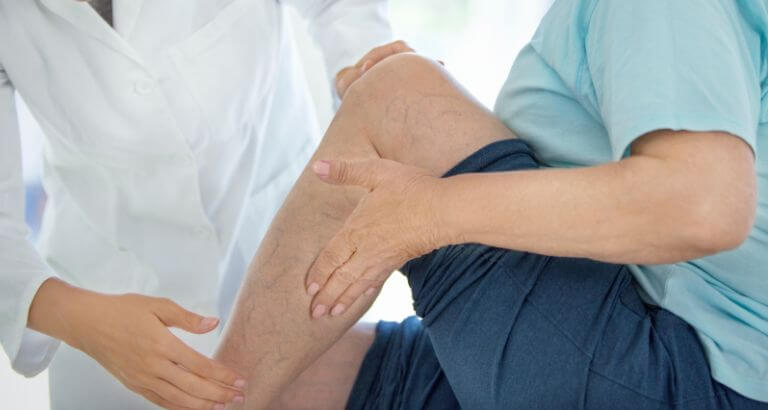
What Causes Thread Veins on the Face and Legs
They tend to arrive uninvited. A little cluster of fine red or purple lines across the cheeks or around the nose, or a spidery patch on the legs that was not there a few years ago. Thread veins are extremely common, completely harmless in themselves, and for a lot of people quietly frustrating, because no amount of concealer makes them truly disappear.
The good news is that they are very treatable, and you do not have to put up with them. Here is what causes thread veins, why they turn up where they do, and the non-surgical options for clearing them, from our doctor-led team at Apsaras Aesthetic Clinic in Coventry.
What Thread Veins Actually Are
Thread veins are tiny blood vessels sitting just beneath the surface of the skin that have become dilated or damaged, making them visible. You might also hear them called spider veins or broken capillaries, and the medical term is telangiectasia.
They usually appear as fine red, blue or purple lines, often in a web-like pattern branching from a central point, which is where the “spider” nickname comes from. On the legs, they can spread across an area; on the face, they most often show up around the nose and cheeks.
It is worth saying clearly: thread veins are not dangerous. Unlike varicose veins, they do not bulge, and they are generally painless. For most people, they are purely a cosmetic concern, but a very common and understandable one.
Why Thread Veins Appear
There is rarely a single cause. Usually it is a combination of factors, some within your control and some not.
Genetics play a big part. If thread veins run in your family, you are more likely to develop them, and some people simply have more fragile capillaries.
Age is another. As we get older, the skin thins and loses collagen, and the blood vessel walls weaken, so vessels break or dilate more easily.
Sun exposure is a major contributor, particularly on the face. UV damage weakens the small vessels near the surface, which is one reason facial thread veins are so common and why good sun protection matters for prevention.
Hormones are involved too, which is part of why thread veins are more common in women. Pregnancy and hormonal changes can trigger them.
Then there are lifestyle and circumstantial factors: prolonged standing, which is why they are common on the legs, alcohol, and skin conditions such as rosacea, which is closely linked to facial redness and thread veins. On the legs specifically, thread veins can occasionally be a sign of underlying vein issues, which is something a proper assessment can check for.
How Thread Veins Are Treated
The encouraging part is that thread veins respond well to non-surgical treatment, and the right approach depends on where they are and what they are like. At Apsaras, we use two complementary treatments.
VeinWave uses a technology called thermocoagulation. A very fine needle delivers gentle heat to the vein, sealing it so it fades from view. It does not use lasers, intense pulsed light or injections, and it works particularly well on facial thread veins and the small, delicate red veins around the nose and cheeks. In many cases, the vein disappears there and then, though some areas need more than one session.
Sclerotherapy is often the better choice for thread veins on the legs. A very fine needle injects a solution into the vein that causes its walls to seal together. The vein is then gradually absorbed by the body over the following weeks and fades from view.
Sometimes a combination gives the best result, for example using both approaches together for leg veins, or pairing vein treatment with something that addresses generalised redness. Because we are a doctor-led clinic, we assess which treatment, or combination, genuinely suits your veins rather than applying a one-size-fits-all approach.
What to Expect From Treatment
Thread vein treatments are quick and minimally invasive, usually carried out in a short appointment with little to no downtime.
You may notice some redness or minor marking in the treated area immediately afterwards, which settles over the following days. Depending on the extent of the veins, more than one session may be needed to get the result you want, and we will give you a realistic idea of that at your consultation.
It is also worth being honest that treatment clears the veins you have, but it does not stop new ones from forming if the underlying tendency remains. Addressing contributing factors, especially sun protection on the face, helps reduce the chance of them coming back.
Preventing Thread Veins Where You Can
You cannot change your genetics or your age, but a few things genuinely help reduce your risk or slow new ones appearing.
Protect your skin from the sun with a good broad-spectrum SPF, particularly on the face. Avoid extremes that dilate facial vessels where you can. If you stand for long periods, moving regularly and, where appropriate, supportive measures for the legs can help. And if you have rosacea, managing it will also help with the associated thread veins.
None of this guarantees you will never get another, but it tilts the odds in your favour and protects the results of any treatment you have.
Book a Free Consultation
If thread veins on your face or legs are bothering you, they are very treatable, and a consultation is the place to start. We will assess them properly and recommend the right treatment for you.
Call us on (024) 7669 3700 or email info@apsaras.co.uk to book. You can read more about our VeinWave and sclerotherapy treatments, and our pages on rosacea and facial thread veins and leg veins.
Apsaras Aesthetic Clinic, Number Three, Siskin Drive, Middlemarch Business Park, Coventry CV3 4FJ.